
Your Senior Pet Has Years of Vet Visits. Do They Have a Baseline?
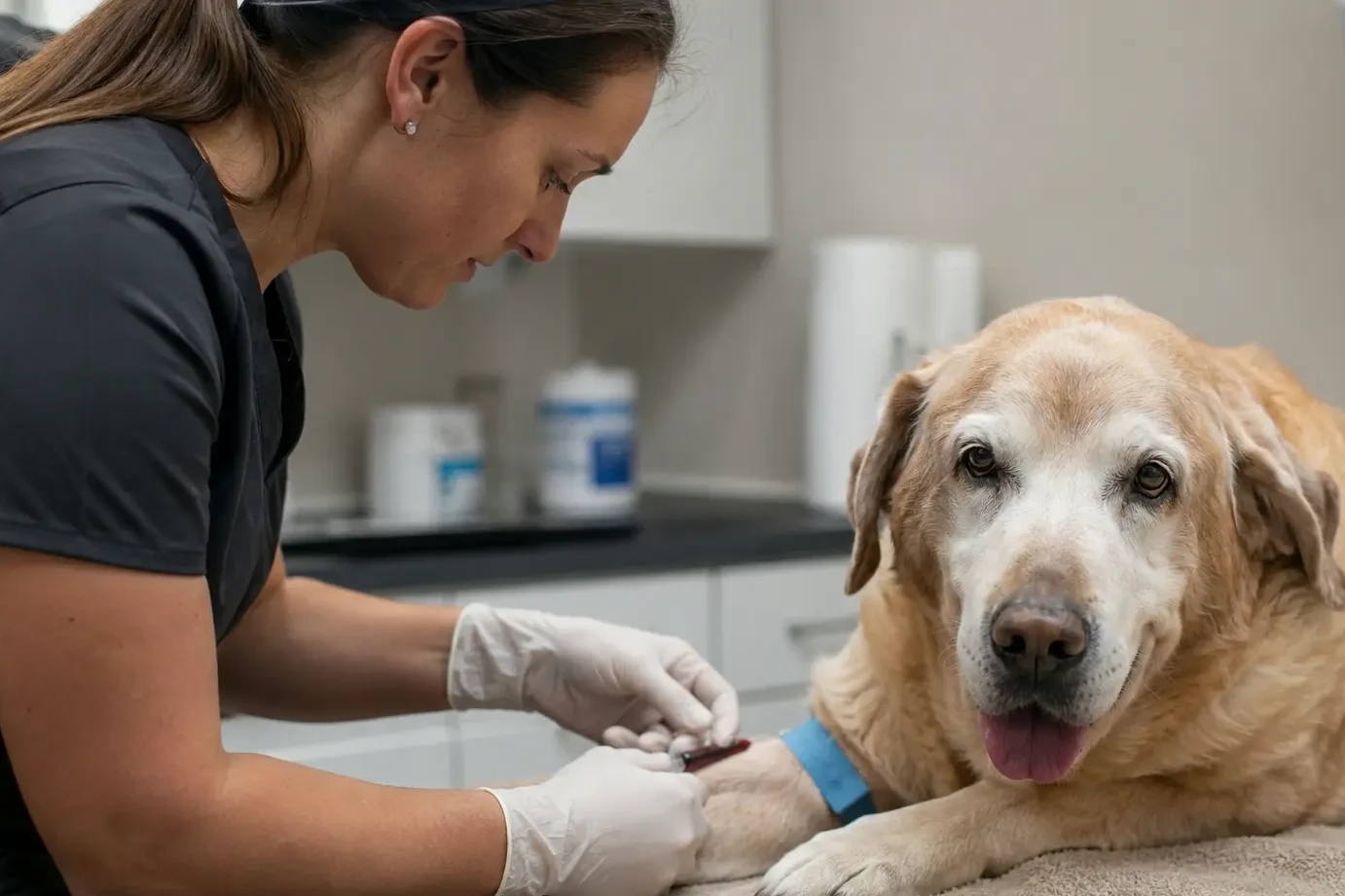
Here's a strange thing that happens more often than you'd expect. A dog or cat has a thick file at Lakeside Pet Hospital, a long history of annual checkups, and an owner who shows up every year like clockwork. Yet there's still no actual senior bloodwork on record. Not because anyone dropped the ball in any obvious way. Just because "routine annual exam" kept happening, year after year, without ever quite becoming "let's actually run the panel."
It's not a story about neglect. It's a story about how easy it is for a genuinely good habit, showing up every year, to quietly stop being enough once a pet crosses into their senior years.
Why "We Go Every Year" Isn't Automatically the Same as "We Have a Baseline"
A physical exam is real information. Your vet can feel a lump, listen to a heart murmur, watch how your dog gets up off the floor. But a hands-on exam can't see inside. It can't tell you what your cat's kidney values looked like last year versus this year, or whether a "probably nothing" symptom is actually the start of a trend.
That's what bloodwork is for. Not as a formality, but as the only way to build an actual baseline, your pet's own normal, not a population average, so that next year's numbers mean something real by comparison.
The American Animal Hospital Association's 2023 Senior Care Guidelines define a dog's senior stage as the last 25% of their expected lifespan. Cats are generally considered senior at 10 years and older. Once a pet reaches that stage, the guidelines recommend key diagnostics, bloodwork and urinalysis, once or twice a year, not just whenever something seems off. That stage arrives earlier than a lot of owners expect. Large dog breeds are often considered senior around 7-9 years, giant breeds as early as 5-7, while smaller dogs may not reach it until 10 or later. For a healthy-looking senior who still acts perfectly normal, that recommendation can feel like overkill. It generally isn't.
How the Gap Actually Happens
It's almost never a single bad decision. It's a few small, individually reasonable ones, stacked up over a few years:
• The first senior-year visit goes fine, the pet "seems totally healthy," and the vet frames bloodwork as something to consider "if anything comes up."
• A vaccine due date becomes the main reason for the visit, so the appointment time centers on that rather than on a full senior workup.
• The pet changes vets, or clinics, partway through their senior years, and the new practice doesn't have full visibility into what was or wasn't run previously.
• Cost comes up, the owner defers bloodwork "for next time," and next time arrives with the same conversation.
None of that is dramatic. It's just how a gap forms, quietly, reasonably, one visit at a time, until a pet is well into their senior years with a full appointment history and no real internal picture of how their kidneys, liver, or thyroid are actually doing.
Why It Matters More for Cats, Specifically
Dogs tend to show some outward sign when something's wrong: a limp, reduced appetite, obvious lethargy. Cats are built differently. A cat in genuine kidney trouble can look and act almost completely normal in the early stages. Their body compensates for the lost function, and standard blood tests don't always catch it early. Cornell University's Feline Health Center notes that creatinine, the marker most routine bloodwork relies on, often doesn't rise until a cat has lost almost 75% of kidney function. A newer marker called SDMA can flag the problem when only about 40% of function is gone. That's exactly the situation where a baseline pays off. Not because it prevents the disease, but because it gives your vet something real to compare against the moment something does start to shift, instead of discovering the problem only once it's visibly serious.
What's Actually in a Senior Panel, and Why the Comparison Is the Point
A standard senior workup usually covers a CBC (red cells, white cells, platelets), a chemistry panel (kidney and liver values, blood sugar, electrolytes), a urinalysis, and, especially for cats, a thyroid check. None of that is exotic; it's the standard workup most vets already recommend.
What changes the value of all four isn't running them once, it's having last year's numbers sitting next to this year's. A kidney value that's "within normal range" on its own can still represent a real shift if it's crept up steadily from a baseline three years back. Without that baseline, your vet is reading the number cold. With it, they're reading a trend, and a trend is what actually catches something early.
A Simple Way to Check Where Your Own Pet Stands
You don't need to wait for your next appointment to find out if there's a gap. Two things worth asking, either of yourself or your vet's office:
- "When was the last time bloodwork was actually run, not just discussed?" If the honest answer is "a few years ago" or "I'm not sure," that's worth raising at the next visit, not waiting on.
- "Do we have anything to compare against if a number comes back abnormal?" A single isolated test result is useful. A test result you can compare against your own pet's prior numbers is far more useful, that comparison is the entire point of a baseline.
If your pet is in the last quarter of their expected lifespan, this is worth bringing up directly rather than assuming it's already been handled. That stage often starts earlier than people expect, depending on breed and size. If your dog's mobility or general energy has you wondering about aging in general, our piece on why dogs can seem fine at the vet but not at home covers a related blind spot worth knowing about.
What We'd Actually Recommend
If your senior pet's last visit was mostly a vaccine check and a quick look-over, that's a completely normal thing to have happened. It's also an easy thing to build on. Call us at (707) 539-3393 or book a senior wellness visit and ask specifically about a senior wellness panel. We can also pull your pet's history and tell you plainly whether a real baseline already exists or whether this is a good year to start one.
Lakeside Pet Hospital has been part of the Santa Rosa community for decades, right here on Montgomery Drive, and we genuinely believe the most useful thing we offer isn't any single test, it's actually following through on the basics, year over year, until they add up to something worth comparing against.
Frequently Asked Questions
My senior pet seems perfectly healthy. Do they really need bloodwork?
That's exactly when a baseline is most valuable. It captures what "healthy" actually looks like for your specific pet, so future changes are easier to catch.
How often should a senior pet actually get bloodwork?
Guidelines generally call for every six to twelve months once a pet reaches their senior years, though your vet may adjust that based on breed, prior results, or any ongoing conditions.
We've switched vets a few times, is it normal to not be sure if a baseline exists?
Very normal, especially with multiple moves or providers involved. It's a quick thing to check at your next visit rather than something to feel behind on.
Is this just an upsell, or does it actually change anything?
The value is specifically in catching a trend before it becomes a crisis. A gradual kidney or thyroid shift, for instance, is far easier and cheaper to manage early than after it's caused visible symptoms.
Is this something Santa Rosa pet owners tend to overlook, or is it rare?
t's actually quite common. Busy schedules and pets who genuinely seem fine create this gap easily. Records here at our Montgomery Drive clinic often show "we see the vet every year" without "we have a real baseline on file," and that pattern shows up across all kinds of attentive, caring pet owners.
Sources: American Animal Hospital Association, 2023 Senior Care Guidelines for Dogs and Cats
Cornell University Feline Health Center, Chronic Kidney Disease.
This post is for general information and isn't a substitute for an in-person veterinary exam.