
Why Is My Dog Panting So Much? Normal vs. Concerning Panting
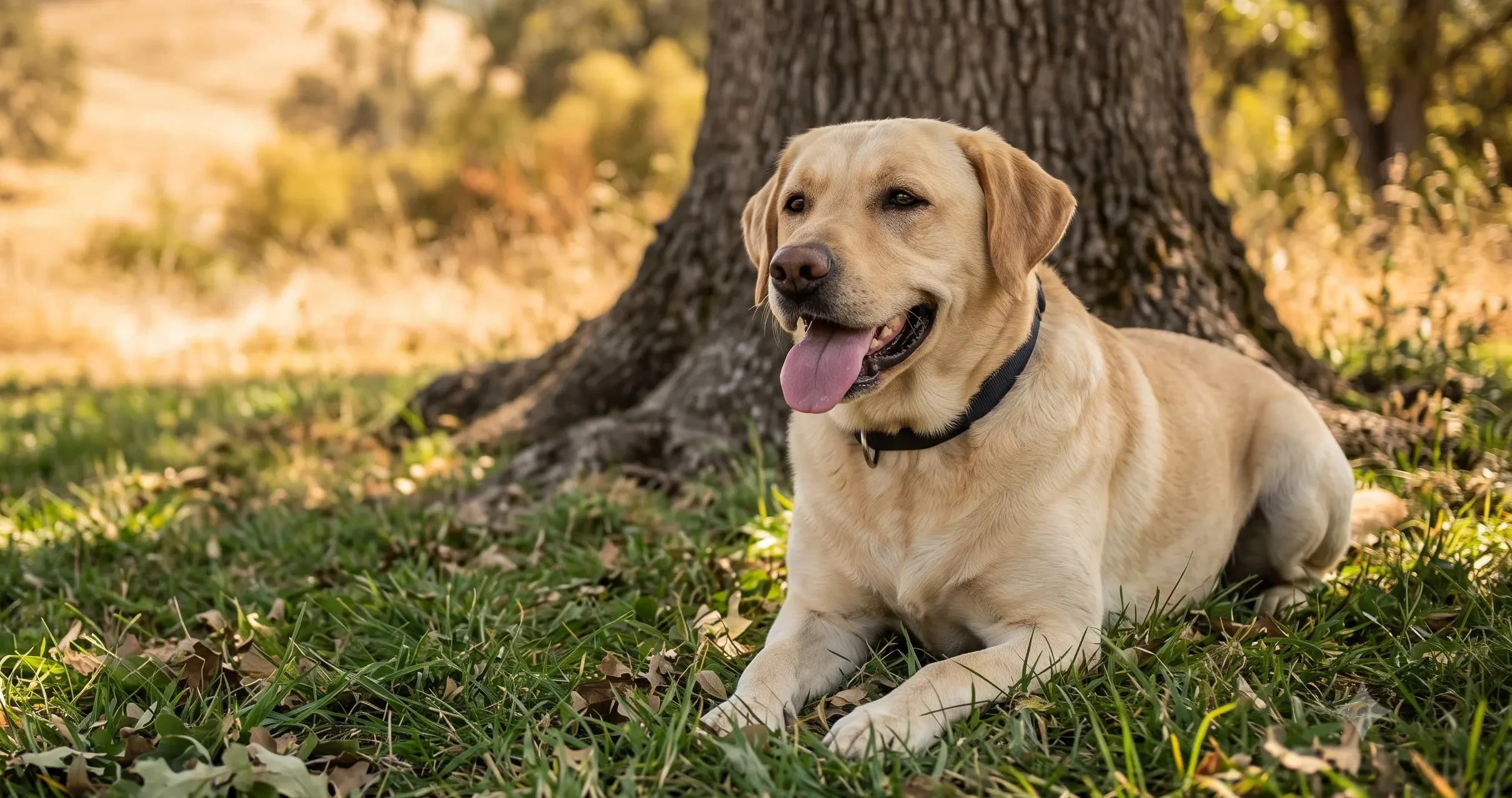
Most dog panting is exactly what it looks like: a dog cooling off after a walk, a game of fetch, or a warm afternoon on the patio. The harder question is what to make of panting when your dog is lying still in a cool room, or panting that keeps going long after the walk is over. This guide shows you how to tell the two apart, including a one-minute breathing count you can do at home tonight, and the signs that mean your dog should be seen right away.
Why Dogs Pant in the First Place
Dogs can't sweat their way out of the heat. According to Cornell's Riney Canine Health Center, a dog's only sweat glands are on the paws, so panting does most of the cooling work. Each quick breath moves air across the moist tongue and airways, and evaporation carries heat away. Researchers at the University of Cambridge add that fine, blood-rich scrolls of bone inside the nose act as a heat exchanger during panting, which helps explain why some breeds struggle with heat far more than others.
What Normal Dog Panting Looks Like
Healthy panting has an obvious trigger and a clear finish line:
- After exercise or play. Heavy panting should taper off within several minutes of resting somewhere cool.
- On a warm day. A dog on a sunny deck will pant more than the same dog on a cool kitchen floor.
- Excitement. The leash coming off the hook or a favorite visitor at the door can set off a burst of panting.
- Short-lived stress. Car rides, grooming, and vet visits often cause panting that settles once your dog relaxes.
Normal panting also looks relaxed. The mouth is loose, the breathing is fairly quiet, and your dog can still settle, take a treat, or respond to you.
The At-Home Test: Count Your Dog's Sleeping Breaths
The most useful thing you can do is learn your dog's breathing rate during sleep, when heat, excitement, and exercise aren't pushing it up. The cardiology service at Texas A&M's veterinary teaching hospital recommends this method:
- Wait until your dog is sound asleep in a room that is neither hot nor cold.
- Watch the chest. One full rise and fall counts as one breath.
- Count for 30 seconds and multiply by two, then write the number down with the date.
Most healthy dogs breathe well under 30 times a minute in their sleep. In a study of 114 healthy adult dogs published in Research in Veterinary Science, owners counted sleeping breaths at home over several weeks. The average dog took about 13 breaths per minute, and no dog averaged higher than 23.
Texas A&M treats a sleeping rate that stays above roughly 30 as abnormal. A dog who is dreaming may briefly breathe faster, so recount a few times over the next couple of hours, and call your veterinarian if the number stays high. The University of Missouri Veterinary Health Center also flags a steady rise of 20 to 30 percent above your dog's usual number over three days in a row. Start counting now, while everything is fine, so you have a baseline to compare against.
Panting vs. Labored Breathing: Know the Difference
The University of Missouri cardiology team lists these signs that a pet is working harder than normal to breathe:
- The rib cage swings out noticeably wider than usual with each breath.
- The belly muscles push visibly with every breath.
- The neck is stretched forward and the front legs are planted wide apart.
- Your dog refuses to lie on their side and stays propped on the chest.
Listen, too. Cambridge's airway researchers point out that a dog whose upper airway is healthy makes very little noise when breathing, so snoring, rasping, or whistling while awake suggests a partial blockage. Gums and tongue should be pink. Blue, purple, or gray tones mean your dog needs emergency care.
Concerning Causes of Excessive Dog Panting
Heatstroke
Heatstroke happens when body temperature climbs to about 105°F or higher and panting can no longer bring it down. Cornell lists heavy panting, drooling, vomiting, bloody diarrhea, weakness, confusion, seizures, and collapse among the signs. Flat-faced, senior, overweight, and thick- or dark-coated dogs are at higher risk. Speed matters: the Royal Veterinary College reports that 97 percent of dogs with mild heat-related illness survived, compared with only 43 percent of dogs with severe heatstroke.
Heart Disease
A sleeping breathing rate that creeps upward can be an early clue that fluid is building in or around the lungs. Texas A&M lists restless sleep, coughing, weakness, tiring easily, and fainting as other signs. If your veterinarian has mentioned a heart murmur, a breathing log is especially worth keeping.
Cushing's Syndrome
In this hormone disorder, the body makes too much cortisol, usually because of a small pituitary or adrenal tumor. Cornell notes that it mainly affects middle-aged and older dogs. Increased panting often travels with more drinking and urination (seen in 80 to 90 percent of cases), a bigger appetite, a pot belly, and thinning hair. Long-term steroid medication can produce the same picture.
Laryngeal Paralysis
Here the nerves that open the voice box stop working properly, narrowing the airway. Cornell describes it as most common in older, large-breed dogs, especially Labrador Retrievers. Owners often notice raspy breathing, a changed bark, and a dog who overheats more easily than before. Heat or excitement can tip these dogs into a breathing crisis quickly.
Flat-Faced Breeds and Airway Syndrome
Pugs, French Bulldogs, and Bulldogs are prone to brachycephalic obstructive airway syndrome (BOAS), caused by narrow nostrils, an overly long soft palate, and crowded tissue inside the nose. Cambridge researchers note that affected dogs can snore while awake and have trouble shedding heat. Loud breathing in these breeds is common, but it is not harmless.
Pain, Anxiety, and Medications
Panting is one of the quieter ways dogs show discomfort. A dog with arthritis, an injury, or a sore belly may pant at rest, pace, or keep getting up and lying back down. Thunderstorms, fireworks, and being left alone can cause similar restless panting, and steroid medications commonly do too.
When Panting Is an Emergency
Go to a veterinarian right away, and call ahead, if your dog is panting along with any of these:
- Collapse, stumbling, confusion, or a seizure.
- Gums or tongue that look blue, purple, gray, or very pale.
- Loud, raspy breathing with obvious effort.
- Heavy panting after heat exposure that doesn't ease within a few minutes of cooling, or vomiting and diarrhea on a hot day.
- A swollen belly with repeated attempts to vomit that bring nothing up.
First Aid for an Overheated Dog: Cool First, Then Drive
The Royal Veterinary College found that fewer than one in four dogs brought to UK clinics with heat-related illness had been actively cooled on the way, and its researchers urge owners to cool first and transport second.
- Move your dog into shade or air conditioning.
- Soak your dog with cool tap water. UC Davis advises against ice water, which constricts skin blood vessels and can slow cooling.
- Keep air moving over the wet coat, and skip draped wet towels, which trap heat.
- Drive to the nearest veterinary hospital with the air conditioning aimed at your dog, and call on the way.
Have your dog examined even if they seem to bounce back, since heatstroke can injure the kidneys and other organs in ways that aren't visible at first.
Panting and Sonoma County Heat
During a July 2024 heat advisory, the County of Sonoma warned of highs from the mid-90s to as high as 110 degrees depending on location, and at the end of September 2024 it issued another advisory with forecast highs of 103 degrees in Sonoma and Healdsburg and 95 degrees on the coast. A dog who spent a cool morning on the coast can be panting hard inland by mid-afternoon. UC Davis notes that sudden temperature jumps are especially risky because dogs haven't had time to adjust.
The county also notes that sidewalks and asphalt can be 40 to 60 degrees warmer than the air, so press the back of your hand to the ground before a walk. On hot days, walk early or late, bring water, and never leave your dog in a parked car. If heat arrives alongside wildfire smoke, see our guide to wildfire smoke and pets
Frequently Asked Questions About Dog Panting
Why is my dog panting at night?
A warm bedroom or noise anxiety can cause nighttime panting. Panting night after night in a cool room, especially with pacing or trouble settling, can point to pain, heart disease, Cushing's syndrome, or age-related changes. Count your dog's sleeping breaths and share the numbers with your veterinarian.
Why is my older dog panting so much?
Senior dogs handle heat less efficiently and are the age group most likely to develop arthritis, heart disease, Cushing's syndrome, and laryngeal paralysis. More panting in an older dog is worth a checkup, particularly with more drinking, a changed bark, or less stamina.
Is it normal for a dog to pant while resting?
Brief panting right after lying down, or in a warm room, can be normal. Steady panting while your dog is calm and cool is not. Check the sleeping breathing rate, and book a visit if it stays above 30.
How can I tell if my dog is panting from pain?
Pain-related panting usually has no clear trigger and comes with other changes, such as restlessness, reluctance to lie down or climb stairs, limping, hiding, or a hunched posture.
When to Call Lakeside Pet Hospital
If your dog's panting has changed or the sleeping breath count keeps climbing, we are glad to take a look. Bring your breathing log and, if you can, a short phone video of the panting at home, since many dogs breathe faster from nerves at the clinic.
Lakeside Pet Hospital is family-owned, serving Sonoma County for over 40 years. Call us at (707) 539-3393 or request an appointment online We are at 4331 Montgomery Dr, Santa Rosa, CA 95405. For breathing trouble, collapse, or suspected heatstroke after hours, go to the nearest 24-hour emergency veterinary hospital right away.
References
- Cornell Richard P. Riney Canine Health Center. Heatstroke: A medical emergency. View resource
- Cornell Richard P. Riney Canine Health Center. Cushing's syndrome. View resource
- Cornell Richard P. Riney Canine Health Center. Laryngeal paralysis. View resource
- Texas A&M University College of Veterinary Medicine, Cardiology Service. Measuring Your Pet's Breathing Rate. View resource
- Rishniw M, Ljungvall I, Porciello F, Häggström J, Ohad DG. Sleeping respiratory rates in apparently healthy adult dogs. Research in Veterinary Science, 2012;93(2):965-969. View abstract
- University of Missouri Veterinary Health Center, Cardiology. At-Home Monitoring of Pets with Heart Disease. View resource
- University of Cambridge Department of Veterinary Medicine, BOAS Research Group. Recognition and Diagnosis. View resource
- Royal Veterinary College, VetCompass. The RVC urges owners of hot dogs to "cool first, transport second" (2023). View resource
- UC Davis School of Veterinary Medicine. Heat-Related Illness in Dogs. View resource
- County of Sonoma Department of Health Services. Sonoma County Health Officer extends heat advisory through Friday (July 2024). View resource
- County of Sonoma Department of Emergency Management. Sonoma County Health Officer issues health advisory concerning heat wave (September 2024). View resource
Medically reviewed by: Deepa Sharma, DVM
This article is intended for general educational purposes and is not a substitute for professional veterinary advice, diagnosis, or treatment. If you have concerns about your dog's breathing or health, please contact your veterinarian. If your dog is struggling to breathe or has collapsed, seek emergency veterinary care immediately.