
My Dog Ate a Mushroom: What to Do, and Why Sonoma County Yards Are Riskier Than Most
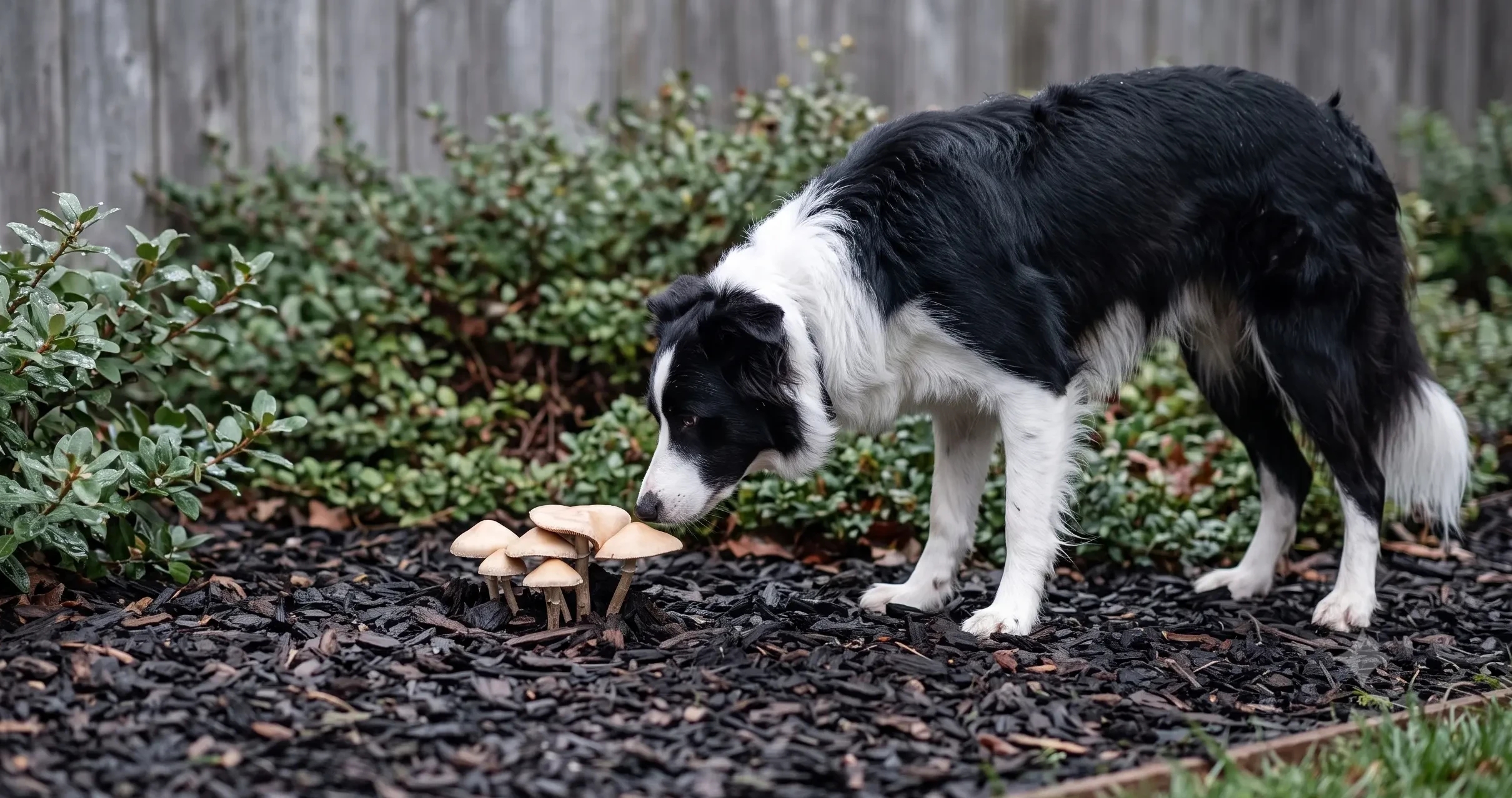
You look out the window and your dog is chewing something. By the time you get there, half a mushroom is gone from the lawn and the other half is in her mouth. If you are standing in the yard right now thinking my dog ate a mushroom and I have no idea if that is bad, here is the short version: call your veterinarian or the nearest emergency hospital now, before any symptoms appear.
That advice sounds dramatic for a lawn mushroom. In most of the country it might be. In Sonoma County it is not, and the reason comes down to a single species that grows under our oaks.
What to Do in the First Few Minutes
- Call right away. Do not wait to see whether your dog gets sick. Treatment works best before signs begin.
- Do not try to identify the mushroom yourself. There are thousands of species and the dangerous ones have harmless-looking twins. Identification is not your job and it is not what determines the next step.
- Take a photo, then collect a sample. UC Davis suggests bringing a piece along, damp paper towel around it, sealed inside a plastic bag. Photograph it where it grew as well, base included.
- Wash your hands thoroughly and keep children and other pets away from the rest of the patch.
- Do not induce vomiting at home unless a veterinarian tells you to. Home remedies can cause their own injuries and can delay the care that actually helps.
- Write down the time. How long ago it happened shapes every decision that follows.
You can also reach the California Poison Control System at 1-800-222-1222, which handles both human and animal mushroom calls and has been tracking this exact problem across our region.
Why "He Seems Fine Now" Is the Most Dangerous Moment
This is the part that generic pet-safety articles leave out, and it is the part that costs dogs their lives.
With the mushrooms that matter most here, the first signs are gastrointestinal, and they are late. The California Department of Public Health describes vomiting, watery diarrhea, belly pain, and nausea starting roughly 6 to 24 hours after ingestion, and then usually easing within about a day. That improvement is the trap. CDPH calls it deceptive, because serious to fatal liver damage can still develop 48 to 96 hours after the mushroom was eaten.
So the dog who threw up overnight and is bouncing around the kitchen the next morning may not be recovering. The toxin may simply be working somewhere you cannot see. By the time the liver fails, the window when treatment works best has usually closed.
That is why the instruction is to call immediately rather than to wait and watch. It runs against every instinct, because waiting is what we do with most minor things dogs eat. Here it is the wrong move.
The Death Cap: The One That Makes This Local
Amanita phalloides, the death cap, is the reason Sonoma County owners should take a lawn mushroom seriously. UC Davis describes it as found throughout Northern California and potentially fatal in small amounts, with toxins capable of causing liver failure within 24 hours along with damage to the kidneys and intestinal tract.
Two details make it a backyard problem rather than a wilderness one.
First, it grows with trees we plant and live among. CDPH notes death caps are found particularly next to oaks, other hardwoods, and some pines. If you have a coast live oak in the yard or along your street, you have the right conditions.
Second, our weather cooperates with it. Rain drives the growth, which is why the danger climbs through fall and winter here rather than in high summer. UC Davis notes these mushrooms are prevalent in summer and autumn, and that warm, wet stretches are when yards need watching. Irrigation matters too, since a watered lawn under an oak can produce mushrooms outside the rainy season.
Last winter made the local picture concrete. Between November 18 and January 6, the California Poison Control System counted 35 people hospitalized with amatoxin poisoning across Northern California and the Central Coast, including three deaths and three liver transplants. Sonoma County was one of the counties where patients were treated. Those were human foraging cases rather than dogs, but they tell you what was fruiting in our neighborhoods, and CDPH's advice to residents included keeping pets away from wild mushrooms.
How Bad Is It for Dogs?
Blunt, because the number matters: UC Davis reports that death cap ingestion leads to death in about 80% of dogs that eat them.
Dogs do survive. UC Davis published the case of Sadie, a 10-year-old Labrador who ate a death cap growing in her own family's yard. Her owners had not noticed the mushrooms at all. She went into liver failure, spent ten days hospitalized, and came home. Months later she was diagnosed with Addison's disease, which her veterinarians believe may have been a consequence of the poisoning, and she now needs lifelong medication.
Two things worth taking from that story. Survival is possible with fast, aggressive care. And the mushrooms were growing in an ordinary suburban yard that nobody had thought to inspect.
What About Ordinary Lawn Mushrooms?
Most of what pops up in a Santa Rosa lawn after rain is harmless. The problem is that you cannot sort the harmless from the lethal by looking, and neither can we without a laboratory. UC Davis lists several other species toxic to dogs beyond the death cap, including Amanita gemmata, Amanita muscaria, Galerina marginata, Gyromitra species, Inocybe species, and Clitocybe dealbata. Some hit the liver, others the kidneys, others the nervous system, producing tremors or seizures.
The working rule from UC Davis is to start from the assumption that anything growing wild is dangerous to your dog.
Store-bought mushrooms are a different matter. UC Davis notes it is probably not an emergency if your dog grabs a slice of button mushroom off the kitchen floor or steals a piece of portobello. What was cooked with it, such as onions, garlic, or heavy seasoning, is more likely to be the issue than the mushroom itself.
What Treatment Involves
It depends on the species, the timing, and how your dog is doing when she arrives. Early on, the priority is removing as much toxin as possible before it is absorbed. Supportive care such as intravenous fluids is common, and medications may be given to counter specific toxins.
For the amatoxin mushrooms, UC Davis points to blood purification methods, total plasma exchange among them, which strip toxin out of circulation and may avert a fatal outcome when started early enough. That level of care lives at referral centers, and arriving early is what makes it worth anything.
Keeping Them Out of Your Yard
- Walk the yard before you let your dog out, especially the first morning after rain and during the fall and winter months
- Pay closest attention under and around oaks, other hardwoods, and pines, including the drip line well out from the trunk
- Check irrigated areas even in dry weather, since sprinklers create the same conditions rain does
- Pull mushrooms with a bag over your hand, tie it off, and put them in the trash rather than the compost or green bin
- Keep your dog leashed on oak woodland trails and in parks during the wet months
- Practice a reliable "leave it," which buys you the seconds that matter
- Tell anyone who watches your dog what to look for, since a dog sitter who does not know to check the yard cannot protect against it
Removing the mushrooms you see does not remove the fungus underground, so this is a habit through the season rather than a one-time cleanup.
Frequently Asked Questions
My dog ate a mushroom but seems fine. Should I still call?
Yes. With the most dangerous species there is a delay of several hours before any signs appear, followed by an apparent recovery while damage continues. Looking fine in the first hours tells you very little, and those hours are when treatment works best.
How long after eating a mushroom would my dog get sick?
For amatoxin-containing mushrooms, initial signs typically begin 6 to 24 hours after ingestion and often ease within a day, with liver damage potentially developing 48 to 96 hours out. Other toxic species act much faster, sometimes within minutes to a couple of hours.
Should I make my dog throw up?
Not on your own. Call first. Whether to induce vomiting depends on the timing and what was eaten, and home attempts can injure your dog or waste time that matters more.
Are the mushrooms growing in my lawn poisonous to dogs?
Some are, many are not, and the two groups are not reliably distinguishable by appearance. Because Sonoma County yards can grow genuinely lethal species, the safest approach is to treat any wild mushroom as toxic and remove them as they appear.
What time of year is worst in Sonoma County?
Risk rises with rain, so fall and winter are the months to watch most closely here. Irrigated lawns and gardens can produce mushrooms outside those months as well.
Talk With Our Team
If your dog ate a mushroom, do not spend time searching for a photo match. Call us at (707) 539-3393 during our hours, or head to the nearest emergency hospital if we are closed. We would far rather see a dog who turns out to have eaten something harmless than meet one two days later in liver failure.
Lakeside Pet Hospital is a family-owned practice that has served Sonoma County for over 40 years.
References
- University of California, Davis School of Veterinary Medicine, Animal Health Topics. Mushroom Toxicity in Dogs. View resource
- University of California, Davis School of Veterinary Medicine. Mushroom Poisoning Has Unreported Consequence for Dog, 2023. View case
- California Department of Public Health. Death Cap Mushrooms Linked to Three Deaths, Three Liver Transplants and 35 Hospitalizations, January 14, 2026. View advisory
Medically reviewed by: Deepa Sharma, DVM
This article is intended for general educational purposes and is not a substitute for individual veterinary advice. If you have concerns about your pet's health, please contact your veterinarian.